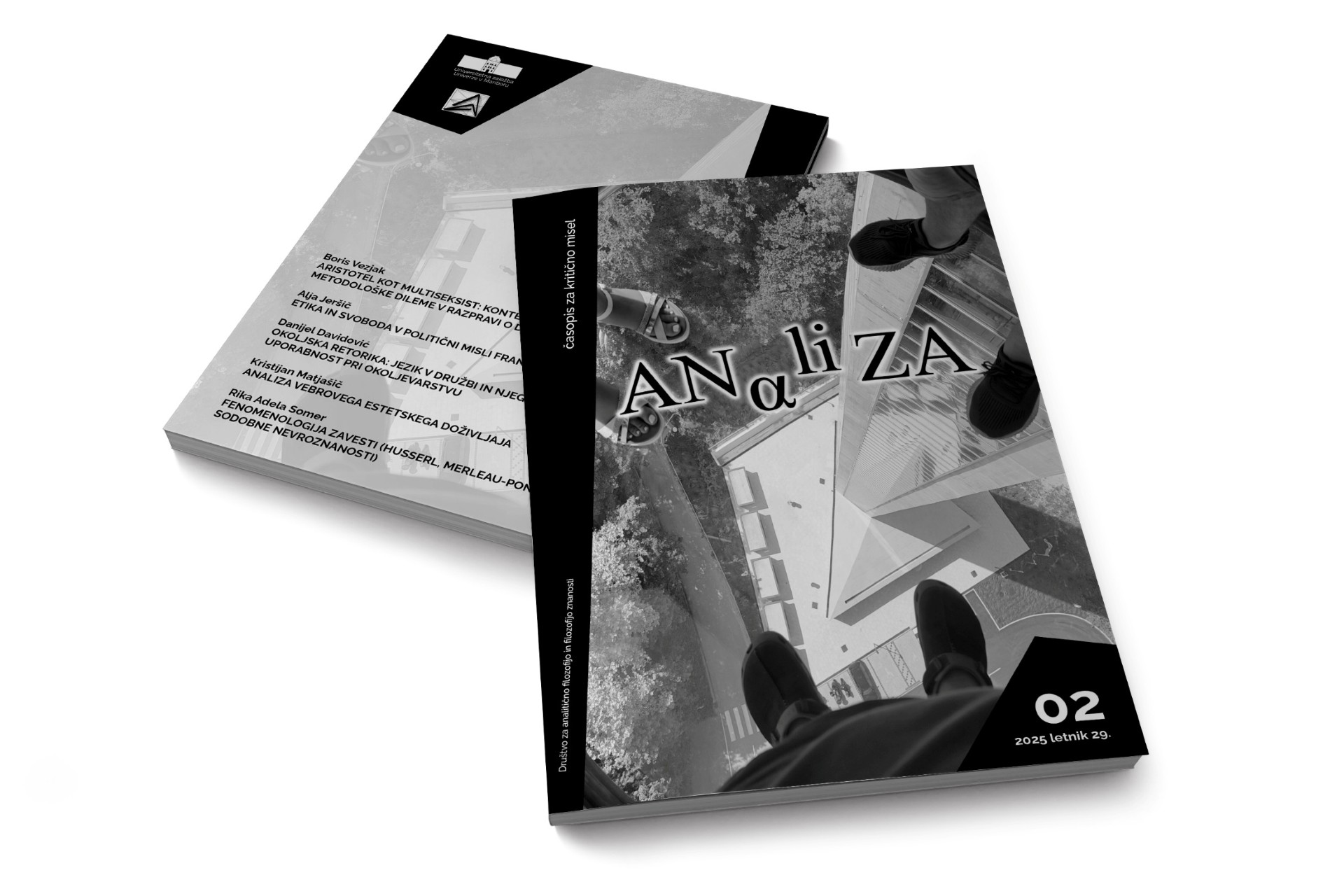
Okoljska retorika
Jezik v družbi in njegova uporabnost pri okoljevarstvu
Ključne besede:
filozofija jezika, okoljska retorika, družbena ontologija, govorna dejanja, AristotelPovzetek
Članek obravnava vlogo jezika in retorike pri razumevanju ter reševanju sodobnih okoljskih izzivov. Avtor gradi na tranzitivnem argumentu, ki povezuje štiri ključne elemente: družbo, okolje, jezik in retoriko, kjer v izhodišču predstavi analizo negativnih vplivov industrijske družbe na okolje, čemur sledi teoretska utemeljitev jezika kot konstitutivnega elementa družbene stvarnosti. Z uporabo Searlove socialne ontologije in teorije govornih dejanj avtor nato pojasnjuje, kako jezikovna uperjenost in dogovori vzpostavljajo družbena dejstva in institucije. Glavni del besedila se osredotoči na jezikovni relativizem in uokvirjanje, kjer avtor s konkretnimi primeri demonstrira moč besedišča in retorike pri oblikovanju javnega mnenja. V sklepnem delu je predstavljena še uporabna vrednost klasične retorike, kjer je prikazano, kako lahko uporaba Aristotelovih prepričevalnih sredstev – etosa (značaj), logosa (argumentacija) in patosa (čustva) – služi kot učinkovito orodje za spodbujanje okoljske odgovornosti. Avtor v zaključku ugotavlja, da je obvladovanje okoljske retorike nujno za prehod od zgolj zavedanja k dejanskemu družbenemu ukrepanju.
Prenosi